Talks
AI talks, in Korean
Great AI talks and keynotes deserve a wider audience. Each video here plays from its original YouTube channel with my Korean subtitles overlaid — built with a glossary-driven translation pipeline tuned for technical accuracy. 좋은 AI 발표는 더 넓은 청중을 만나야 합니다. 여기의 모든 영상은 원본 YouTube 채널에서 재생되고, 그 위에 기술 용어 정확도에 맞춰 조정한 용어집 기반 번역 파이프라인으로 만든 한글 자막을 얹었습니다.
Subtitles are machine-assisted (ASR captions → LLM translation) and may contain errors — corrections welcome. Videos are never re-hosted; all views go to the creators. 자막은 자동 캡션을 LLM으로 번역해 만들어 오류가 있을 수 있습니다 — 제보 환영합니다. 영상은 재업로드하지 않으며 조회수는 모두 원작자에게 갑니다.
 KO SUB
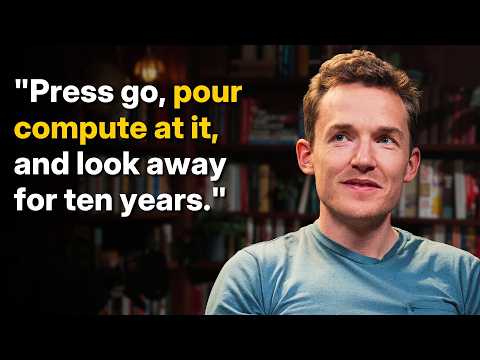
Neil Movva — Why AI Is About to Get 1000x Cheaper
Neil Movva · Sail Research co-founder · ex-NVIDIA, Apple, Together AI
Ex-NVIDIA kernel engineer Neil Movva explains how Sail Research's "token factory" — throughput-first software, a scavenger strategy for overlooked chips, and tiny renewable-powered data centers — will make inference for long-horizon background agents orders of magnitude cheaper. 전 엔비디아 커널 엔지니어 닐 모바가 처리량 우선 소프트웨어, 저평가된 칩을 쓸어 담는 스캐빈저 전략, 재생에너지 기반 소형 데이터센터로 롱 호라이즌 백그라운드 에이전트의 추론 비용을 수백~수천 배 낮추려는 '토큰 공장' 구상을 풀어놓는다.
 KO SUB
Grant Sanderson (3Blue1Brown) — AI disproved a famous math conjecture. Now what?
Grant Sanderson · 3Blue1Brown
3Blue1Brown's Grant Sanderson and Dwarkesh Patel ask what comes after AI disproved the unit distance conjecture — whether machines can learn the century-long instinct that produced Galois theory, why "grindability" and not just verifiability explains math's fast progress, and what is left for mathematicians when proving, explaining, and eventually conjecturing are all automated. AI가 단위 거리 추측을 반증한 다음은 무엇인가 — 3Blue1Brown의 그랜트 샌더슨과 드워케시 파텔이 갈루아 이론을 낳은 100년짜리 직관을 기계가 배울 수 있는지, 수학의 빠른 진전을 설명하는 것이 검증 가능성이 아니라 '갈아 넣을 수 있음'인 이유, 그리고 증명과 설명과 추측까지 자동화된 뒤 수학자에게 남는 일을 이야기한다.
 KO SUB
Jim Fan (NVIDIA) — Robotics' End Game
Jim Fan · NVIDIA Robotics
NVIDIA's robotics lead proposes "the great parallel": port the LLM recipe to robots by pre-training on the next physical world state, aligning with action fine-tuning, and letting RL carry the last mile. He argues VLAs spend their parameters in the wrong place — strong on nouns and knowledge, weak on physics and verbs — while video models like Veo 3 pick up gravity, refraction and visual planning purely from predicting pixels, and introduces world action models (WAMs). On data, he climbs from teleoperation's 24-hour-per-robot ceiling through wearables to egocentric human video: EgoScale pre-trains on 21K hours with under 0.1% teleop and yields a clean log-linear scaling law for dexterity. He closes on three remaining achievements — the physical Turing test, physical APIs, and physical auto research — and puts the tech tree's completion at 2040. 엔비디아 로보틱스 총괄이 '위대한 평행'을 제안한다 — LLM의 성공 공식을 로봇에 그대로 옮겨, 다음 물리 세계 상태를 사전학습하고 액션 파인튜닝으로 정렬한 뒤 마지막 구간은 강화학습에 맡긴다는 것이다. VLA는 파라미터를 엉뚱한 곳에 쓴다고 지적한다 — 명사와 지식엔 강하지만 물리와 동사엔 약하다는 것. 반면 Veo 3 같은 영상 모델은 픽셀 예측만으로 중력과 굴절과 시각적 계획을 스스로 익히며, 여기서 월드 액션 모델(WAM)이 나온다. 데이터 쪽에서는 로봇 1대당 하루 24시간이라는 텔레옵의 천장에서 출발해 웨어러블을 거쳐 1인칭 인간 영상으로 올라간다. EgoScale은 2만 1,000시간을 사전학습하고 텔레옵은 0.1% 미만만 쓰면서 손 조작의 깔끔한 로그-선형 스케일링 법칙을 얻는다. 마지막으로 남은 세 가지 업적 — 피지컬 튜링 테스트, 피지컬 API, 피지컬 오토 리서치 — 를 짚고 테크 트리 완성 시점을 2040년으로 못박는다.
 KO SUB
How We Scaled Kimi K2.5
Zhilin Yang · Moonshot AI CEO
Moonshot AI's CEO on scaling open models: the Muon optimizer story, Kimi Linear and Attention Residual architectures, early-fusion vision-text training, and agent-swarm RL. Moonshot AI CEO가 말하는 오픈 모델 스케일링 — Muon 옵티마이저, Kimi Linear와 Attention Residual 아키텍처, 얼리 퓨전 비전-텍스트 학습, 그리고 에이전트 스웜 RL까지.
 KO SUB
State of AI in 2026: LLMs, Coding, Scaling Laws, China, Agents, GPUs, AGI
Nathan Lambert & Sebastian Raschka · Ai2 · author of Build a LLM (From Scratch)
Lex Fridman sits down with Nathan Lambert (Ai2) and Sebastian Raschka for a four-and-a-half-hour map of AI in 2026 — the DeepSeek moment and China's open-weight surge, what actually changed inside the transformer, pre-/mid-/post-training and RLVR, the three axes of scaling, agents and tool use, GPUs and gigawatt data centers, the ATOM push for American open models, and why AGI timelines keep sliding. 렉스 프리드먼이 네이선 램버트(Ai2), 세바스찬 라시카와 함께 2026년 AI 지형을 4시간 반 동안 훑는다 — 딥시크 모먼트와 중국 오픈 웨이트 모델의 부상, 트랜스포머 안에서 실제로 바뀐 것, 사전학습·미드트레이닝·포스트트레이닝과 RLVR, 스케일링의 세 축, 에이전트와 도구 사용, GPU와 기가와트급 데이터센터, 미국 오픈모델을 밀어붙이는 ATOM 프로젝트, 그리고 AGI 타임라인이 자꾸 밀리는 이유까지.
 KO SUB
Can humans make AI any better?
Welch Labs · Educational AI/math explainers
Welch Labs traces how the hand-built knowledge graph of 1970s speech recognizer Harpy was swept away by learned hidden Markov models, uses Richard Sutton's "Bitter Lesson" — and Sutton's own 2025 claim that LLMs are its negative example — to ask whether today's language models are the next Harpy, and looks to AlphaGo's shift from imitating humans to learning from experience for what might come after. 1970년대 음성 인식 시스템 하피의 손수 만든 지식 그래프가 데이터로 학습하는 은닉 마르코프 모델에 밀려난 역사에서 출발해, 리처드 서턴의 「쓰라린 교훈」과 "LLM은 오히려 그 반례"라는 2025년 서턴 본인의 발언을 통해 오늘날의 언어 모델이 또 하나의 하피인지 묻고, 인간 모방에서 경험 학습으로 넘어간 알파고에서 그다음 단계의 실마리를 찾는 영상입니다.
 KO SUB
Ilya Sutskever — We're moving from the age of scaling to the age of research
Ilya Sutskever · Safe Superintelligence co-founder · ex-OpenAI chief scientist
Ilya Sutskever tells Dwarkesh Patel why scaling has run its course and AI is returning to an age of research — from models' weak generalization and the missing human-like learning principle to superintelligence as a continual learner and SSI's plan to make it safe. 일리야 수츠케버가 드워케시 파텔과 함께 스케일링의 시대가 저물고 연구의 시대가 돌아온 이유를 짚으며, 모델의 일반화 한계, '인간처럼 배우는' 초지능, 그리고 SSI의 안전 전략을 이야기합니다.
 KO SUB
Andrej Karpathy — We're summoning ghosts, not building animals
Andrej Karpathy · OpenAI founding member · Eureka Labs
Andrej Karpathy on why AI agents need a decade rather than a year — LLMs as summoned ghosts rather than evolved animals, RL's "sucking supervision through a straw" problem, self-driving's march of nines, and his Starfleet Academy vision for education in the AI era. 안드레이 카파시가 '에이전트의 10년'이 필요한 이유부터 동물이 아닌 유령으로서의 LLM, 강화학습의 근본적 한계, 자율주행이 가르쳐준 '9의 행진', 그리고 AI 시대 교육을 위한 스타플릿 아카데미 구상까지 이야기합니다.
 KO SUB
Richard Sutton – Father of RL thinks LLMs are a dead end
Richard Sutton · University of Alberta · Turing Award 2024
RL pioneer and Turing Award winner Richard Sutton argues that LLMs — goalless mimics with no ground truth — are a dead end, that real intelligence must learn continually from the stream of experience, and that succession to designed digital intelligence is inevitable and worth embracing. 강화학습의 아버지이자 튜링상 수상자 리처드 서튼이 목표도 정답도 없는 LLM은 막다른 길이며, 진짜 지능은 경험의 스트림에서 지속적으로 배워야 하고, 설계된 디지털 지능으로의 승계는 받아들일 만한 필연이라고 주장합니다.
 KO SUB
Tri Dao — The End of Nvidia's Dominance, Why Inference Costs Fell & The Next 10X in Speed
Tri Dao · Together AI / Princeton
FlashAttention and Mamba author Tri Dao explains why inference got roughly 100x cheaper since ChatGPT and where the next 10x comes from — quantization down to 4 bits, DeepSeek-style latent KV-cache compression, and ever-sparser mixture-of-experts. He argues hardware portability is largely a myth (even NVIDIA rewrites its software each chip generation), so NVIDIA's ~90% grip loosens into a multi-silicon world only as workloads consolidate. Also: inference-first architecture design, why kernel DSLs are increasingly written for LLMs rather than for human engineers, and the 1.5x productivity he actually measures from AI coding tools. 플래시어텐션과 맘바를 만든 트리 다오가 챗GPT 이후 추론 비용이 100배 떨어진 이유와 다음 10배가 어디서 오는지를 설명한다 — 4비트 양자화, 딥시크식 잠재 KV 캐시 압축, 갈수록 희소해지는 MoE. 하드웨어 이식성은 사실상 허상이고(엔비디아조차 칩 세대마다 소프트웨어를 다시 쓴다), 그래서 엔비디아의 90% 점유가 멀티 실리콘으로 풀리는 것은 워크로드가 수렴한 다음이라고 본다. 추론 우선 아키텍처 설계, 커널 DSL이 사람보다 LLM을 위해 쓰이기 시작한 흐름, 그리고 AI 코딩 도구로 실제 측정한 1.5배 생산성까지.